Husband Secretly Reads Wife's Journal and Regrets It

I recently read an article about a woman who was devastated after discovering that her husband had read her private journal. What made the story even more interesting was that her journal apparently contained almost entirely negative thoughts. That struck me as unusual. I prefer a journal that reflects the whole landscape—the ups, the downs, the frustrations, the wins, and all the ordinary stuff in between.

One thing I loved about her story was that she used her journal as part of therapy. Her therapist actually worked with her journal entries, which makes a lot of sense to me. A journal can preserve thoughts and feelings that may be difficult to reconstruct accurately weeks or months later.

That gets into something I find fascinating: contemporaneous notes. It sounds complicated, but it simply means recording your thoughts, feelings, experiences, and observations as close to the time they happen as possible. Contemporaneous notes can carry weight precisely because they capture what someone thought or observed at the time, rather than what they remember much later. We sometimes hear the term when politicians, military leaders, executives, or witnesses produce notes documenting important conversations or events.

There’s another psychological concept worth considering here: negativity bias—our tendency to give negative experiences more attention and weight than positive ones. I wonder whether that partly explains why some journals can sound considerably darker than the person’s overall life actually is. When something is bothering us, that’s often when we feel most compelled to sit down and write. There’s nothing wrong with getting the difficult stuff out, but personally, I want my journal to capture more than that.

That’s one reason I’ve come to prefer audio journal dictation. I start with bullet points from the day and then talk through them. Speaking seems to naturally give me more context. I might describe something frustrating, but then explain what happened afterward, what I learned, what was funny about it, or what else happened that day. The result tends to feel more like my actual life and less like a collection of grievances.

The biggest takeaway from the article, though, may be privacy. Everyone deserves a place where they can think freely without wondering who might eventually read it. If you’re keeping a digital journal, it’s worth thinking about how well it’s protected rather than simply leaving a document accessible on your phone or computer. Microsoft Word, for example, allows documents to be password protected. My personal preference is the Day One journaling app, which can be protected using a passcode or biometric security such as Face ID. I love the app. It has genuinely changed the way I journal.

A journal doesn’t have to be a record of only the worst moments—or only the best ones. I want mine to show the messy, balanced reality of a life being lived in real time.

Where do you keep your journal?

Tinctures, Liniments & Make-Believe

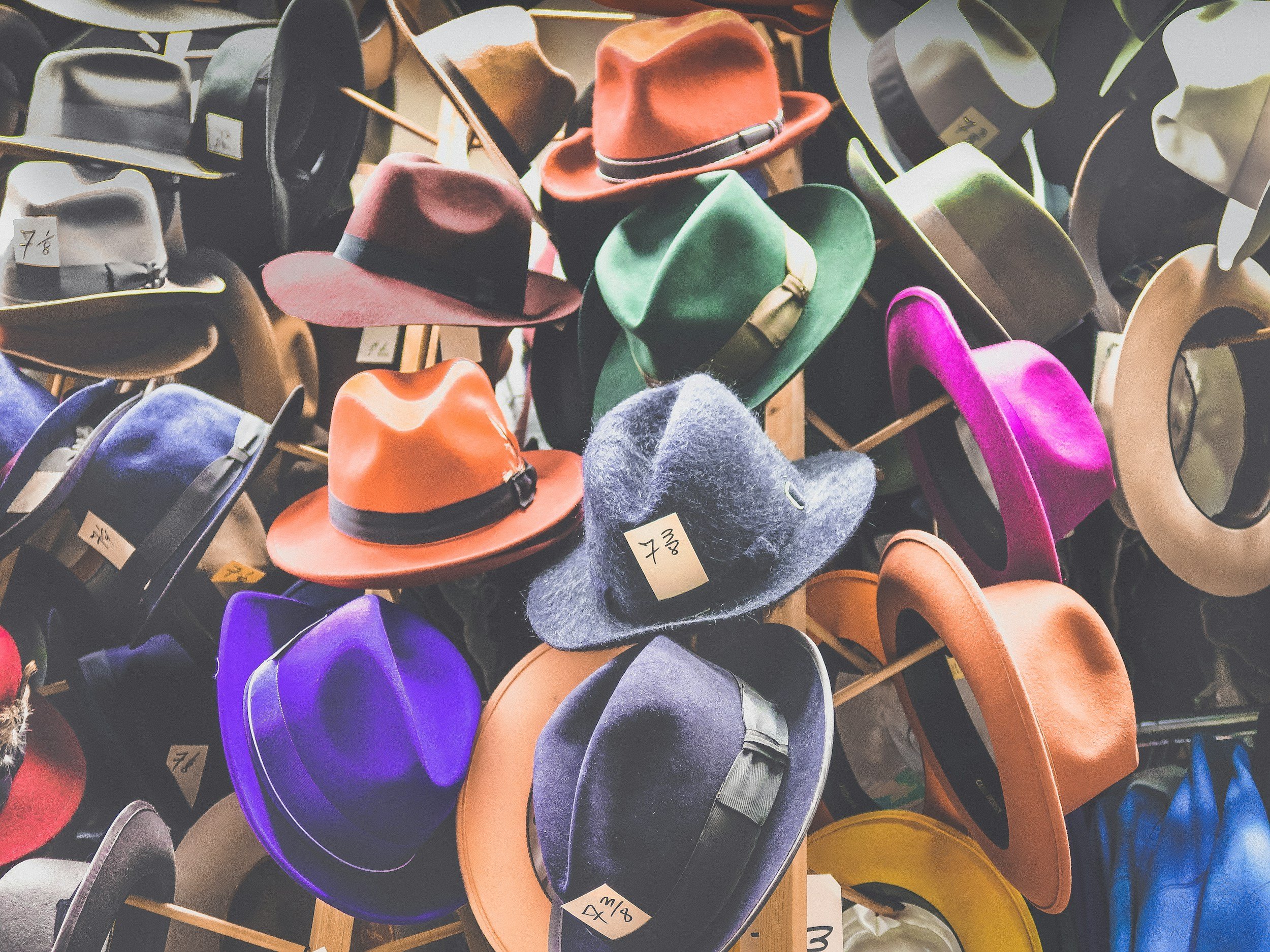
Life changes pretty often. We have to change, too. That’s where our hats come into play. We all wear many different hats, and when life changes, some of those hats need to change with it.

I’m Patient Zero in this whole All the Hats We Wear experiment, so I’m constantly trying things, revising my roles, noticing what works, and occasionally discovering that something I thought was brilliant wasn’t. Lately I’ve been thinking about how much of life comes down to three things: paying attention to what’s already there, giving ourselves permission to play with what could be there, and making sure we don’t build our entire identity around one part of ourselves.

PAY ATTENTION TO THE SMALL STUFF

Years ago, during my music therapy internship at a psychiatric hospital, we had a morning meeting where patients were asked about the highlight of their weekend. One patient’s answer has stayed with me all these years: “Well, I tried some of that Blue Pepsi.”

That was it. I loved the simplicity of it. He wasn’t trying to impress anybody. If you wanted to know the highlight of his weekend, that was the highlight of his weekend.

Who decided our highlights have to be impressive? Maybe you heard a song you haven’t heard since high school. Van Halen’s 5150 can immediately transport me back to senior year, driving around with my buddy Bernie, playing drums while he sang in our band and getting kicked out of places because we played too loud. Maybe it was an amazing sandwich. Maybe your dog did something ridiculous. Those things count. What was your Blue Pepsi this week?

I’ve always loved The Twilight Zone. In one episode, there’s an old-fashioned traveling salesman with “Tinctures and Liniments” written on the side of his wagon. I’m a word nerd, so of course I love those words. A tincture. A liniment. Little concoctions that supposedly make something better.

I think we should have personal versions of them. I have an eyedropper I use for vermouth when I make martinis. I keep burnt-caramel coffee syrup in my car. At work, I have a ridiculously shaggy little rug under my desk. During an afternoon of documentation, I’ll take my shoes off and put my feet on it. Why? Because it feels good. That’s enough.

I also have a tiny crab on my desk that’s supposed to hold a pen. To me, it means something else. It reminds me to advocate for myself. Even a tiny crab will put its claws up against something a hundred times its size. These little objects aren’t going to transform my life, but they might improve Tuesday afternoon by 3%. That’s worth something.

Paying attention to the small stuff also means noticing moments we would otherwise lose. In music therapy school, after our clinical sessions, we had to identify the most therapeutic and least therapeutic moments. That exercise has stayed with me. I’ve adapted it into a journaling question: What was the most meaningful moment of my day?

What’s interesting is that the answer sometimes isn’t one of the things I originally thought was important. You can make your list of accomplishments, problems, errands and conversations and then realize the most meaningful moment was a ten-second interaction you almost forgot. The question forces you to look again.

I’m trying to do the same thing with compliments. Someone recently complimented one of my music therapy groups. She noticed patients cooperating, showing leadership and helping newer members learn the group. It’s easy to hear something like that and think, Good. That’s what I’m supposed to do. Then move on. Meanwhile, somebody says one irritating thing and I can replay it for three days. Why do we do that? Don’t scan your day only for problems. Let the good stuff count, too.

Even giving can require this kind of attention. One of my Hats is Philanthropist & Giver. Recently, I donated a nice roll-up chess set to the hospital where I work. I thought it was going to the adult patients, where I’d probably get to use it with them. Instead, it went to the adolescent side. I was disappointed.

Then I realized how ridiculous that was. I gave it away.

Years ago, a young music therapy client gave me a tin of candy for Christmas. As he handed it to me, he asked if I could return the tin when I finished the candy. His mother immediately corrected him: when you give somebody something, you give it to them. No strings attached.

Apparently I still needed the same lesson.

PLAY WITH YOUR LIFE

I saw a newspaper cartoon recently that showed President Trump sitting in a sandbox surrounded by all his various projects. Forget the politics. The sandbox caught my attention. We don’t have enough play in the way we think about our lives.

Watch little kids. It’s incredible. A block becomes a castle. A stick becomes a sword. A cape makes you a superhero. Kids invent rules, assign meaning to ordinary objects, create characters and build entire worlds around them. Then they behave according to the world they’ve created.

Adults could use a little more of that.

Maybe this weekend you decide, I’m putting on my Writer Hat for two hours. What would a writer do? Open the notebook. Sit down. Write.

Kids don’t spend three months wondering whether they’re qualified to be pirates. They announce that they’re pirates and start looking for treasure. Maybe we need a little more of that. Instead of constantly asking, What am I supposed to do?, try asking: What if?

What if I became a writer? What if I learned guitar? What if I started that project? What if there’s a Hat I should be wearing that I haven’t tried on yet?

Life isn’t something you have to completely figure out. It’s something you can play with.

There’s another side to this, though. Play doesn’t always mean adding more effort. I’ve practiced Transcendental Meditation for years, and it’s probably the only thing in my life where putting absolutely no effort into doing it correctly is how I do it correctly. Sometimes I catch myself trying too hard—even at meditation. Expectation creeps in. Effort creeps in. Then I remember: do less.

That’s not a bad lesson outside meditation either. Sometimes another productivity system, another goal or another burst of effort isn’t what we need. Sometimes we need to stop squeezing so hard.

The same is true when we finally find something we’re passionate about. When I was younger, my mother dated a guy who was studying to become a lawyer. He talked about law constantly. This case. That case. Another case. Looking back, I admire his passion. But there’s a lesson there too: when you finally discover something you’re passionate about, you can become unbearable.

I know All the Hats We Wear is one of my purposes. I think about it constantly. That doesn’t mean my family needs a 45-minute update every time I walk through the door.

I think of purpose as an iceberg. The visible tip can simply be a person who is energized, fulfilled and present. Under the water can be the obsession: notebooks, ideas, experiments, failures, plans, journaling and endless thinking. You don’t have to show everyone the entire iceberg. Sometimes the best evidence of your purpose is simply the person you’re becoming because of it.

I’ve noticed that people who are really good at what they do often build their lives around supporting that work. I love hearing Jerry Seinfeld talk about his craft. He’ll work on a joke and consider it a productive day if he can remove a word or two and make the joke better. Think about that. We’re surrounded by productivity advice telling us to create more, accomplish more and check more things off the list. Seinfeld might spend his energy figuring out how to use one less word.

Instead of asking, How much did I produce today?, maybe the better question is: Did I make the thing better?

Mick Jagger seems to approach his work from another angle, but I think it’s really the same idea. When the Rolling Stones are touring, his day revolves around being at his best when it’s time to walk onto that stage. Eating, exercising, resting, napping—it all supports the main event.

Which makes me wonder: What’s the main event of your day? And is the rest of your day supporting it?

We can even create environments that help certain Hats come alive. I often have old horror movies or comedies playing in the background while I’m doing something else. I’m barely watching them. They create a vibe. Great stand-up comedians do something similar. Once they get an audience laughing, one laugh feeds the next until everyone is riding the wave. They’re priming the pump.

Maybe your Writer Hat has a particular chair, notebook, playlist or cup of coffee associated with it. Don’t always wait to feel creative. Create the conditions that invite creativity.

Which brings me to one of the strangest things I’ve been doing lately.

I’ve been working on an absolutely ridiculous creative project involving a fictional version of Martha Stewart, celebrities, world domination, a giant compound, a gorilla habitat, haunted carnival, monorail, meditation garden, amphitheater and a magical restaurant where the living can have dinner with the dead. There’s considerably more nonsense involved than I can explain here.

I’m not selling it. I’m not publishing it. There’s no business plan. It serves virtually no practical purpose.

And I love it.

I think everybody needs an unnecessary but meaningful project. Something substantial enough to stretch your imagination but completely free from the obligation to monetize it. I call these Just-Because Projects.

You make the thing because you think it should exist.

And I don’t think these projects are wasted time. When you let your imagination run without worrying about the marketplace, you discover ways of thinking that can transfer back into your serious projects. Sometimes the wild horse needs to run before you put a saddle on it.

DON’T LET ONE HAT BECOME EVERYTHING

Of course, putting on new Hats also means accepting that sometimes we’re going to be terrible at them. Or wrong. Or humbled.

I’ve learned that one the hard way.

I once received criticism about a song I used in a music therapy group. I disagreed with the criticism. I knew my field. I knew why I’d used the song. It became a whole thing, and it hurt.

Being humbled hurts.

But here’s the irritating part: my groups got better because of it.

So I’m thankful for it now. Not every criticism is correct, and we shouldn’t automatically surrender our judgment every time somebody disagrees with us. But sometimes there’s useful information hiding inside something we’d rather dismiss.

I’ve learned a similar lesson with All the Hats We Wear. I’ve been developing this company for a long time. Eventually, people don’t want another announcement about what you’re going to do. They want to see it. There’s something to be said for quietly grinding away and allowing the results to speak.

But there’s an even bigger danger with our roles: What happens when one role becomes almost your entire identity?

You’re the executive. Then you retire. You’re the parent. Then the kids leave home. You’re the athlete. Then you get injured. You’re the caregiver. Then the person you’re caring for dies. You’re the employee. Then you lose the job.

Who are you now?

This is one of the reasons I believe so strongly in maintaining a Role List. You don’t want your identity invested in a single stock. You want a mutual fund of meaningful roles.

Parent. Friend. Writer. Musician. Volunteer. Creator. Athlete. Entrepreneur. Whatever yours happen to be.

Then when one role takes a hit—and eventually one will—it hurts, but it isn’t your entire identity.

That role is part of you.

It isn’t all of you.

Maybe that’s the thread running through everything I’ve been thinking about lately. Try on new Hats. Build little worlds around them. Notice the small things that make your days better. Allow yourself to create something completely unnecessary. Pay attention to the moments that matter. And don’t become so invested in one version of yourself that you can’t imagine becoming somebody else.

There’s one simple tool I’ve started using that helps me capture all of this: the Daily Recap Card.

I use 5 × 8 index cards. At the end of the day, I put the date at the top and jot down a few bullet points. Not an essay. Not a formal journal entry. Just what mattered.

An accomplishment. A challenge. Something funny. A conversation. Something I ate. Something I tried. A tiny joy. A moment I don’t want to forget.

Imagine having 365 of these at the end of a year. Imagine having twenty years of them. You could pull out a random date and see the little pieces that made up your life—many of which would otherwise have disappeared completely from memory.

So here’s your challenge: Before you go to bed tonight, grab one index card. Write today’s date. Then write down a few things from today you don’t want to forget.

That’s it. Start with one card.

Because a meaningful life isn’t made only from weddings, promotions, vacations and enormous accomplishments. Sometimes it’s a song you haven’t heard since high school. Sometimes it’s a ridiculous project nobody will ever see. Sometimes it’s a compliment you actually allowed yourself to enjoy.

And sometimes it’s just Blue Pepsi.

Life changes. Your hats should change, too.

Listen to the podcast episode

The Painful Power of Being Humbled

Humility can hit hard because it often challenges a Hat we’re proud to wear. I experienced this as a music therapist when I chose a song for a group that I thought was appropriate. Later, someone questioned whether its lyrics were too dark for the setting. That stung. It wasn’t just about one song—it made me question my judgment in a role where I consider myself experienced and competent.

UFC fighter Bella Mir recently made the massive declaration that she wants to become the greatest athlete of all time—and then lost her bout. That doesn’t make her vision foolish. But it does demonstrate how quickly our grandest vision of ourselves can collide with reality. As the Iron Sheik famously put it after using the camel clutch on an adversary, sometimes life will “make you humble.”

Being humbled doesn’t mean throwing away the Hat. It means learning to wear it better. Keep the huge goals. Keep the confidence. But remain willing to listen, adjust, and learn when life punches a hole in your certainty. Sometimes the lessons that hurt our pride the most are exactly the ones we need.

How Big Should You Dream?

Bella Mir, daughter of former UFC heavyweight champion Frank Mir, has an enormous goal: she wants to become “the best athlete of all time.”

I love huge goals. In the ALHWW system there are 4 types of goals: Action, Deadline, Bucket List, and Skys-the-Limit. Create outrageous goals and vision statements for your life. Imagine Hats that seem well beyond what you’re wearing today. But don’t underestimate the power of quietly working toward them. It feels good when someone randomly asks, “Have you lost weight?” when you’ve been secretly working on it for months. Compare that with announcing your diet to everyone before losing a pound. Sometimes the work speaks louder than the declaration.

There’s another consideration when choosing a future Hat: Can you engage with that role today? Mir announced she wants to be the Greatest Athlete of All Time.” However, that’s not something you can work on directly. You arrive there after doing hundreds of other things exceptionally well. Just like you can’t plan to become a legend - that’s a role that is endowed upon you by the community.

So dream huge—but translate the dream into Hats you can actually wear now. Want to become a bestselling author? Start by wearing the Writer Hat today. Write.

Your biggest vision can remain miles away. Your next Hat should be within reach.

Raised to Be Weird But Became An Effective Leader

Carlie Irsay-Gordon, the owner of the Indianapolis Colts is a unique leader. Her father was the owner of the Colts before her and she took over when he died. She was always an original thinker and even as a child, she marched to the beat of her own drum. Her father encouraged all the kids to “go be weird - it’s cool to be weird.” I love that! How empowering. She originally went to school to become a clinical psychologist and in that time she said she learned how to be neutral. As a board-certified music therapist, I appreciate the slightly odd concept of learning to be neutral. As a counselor and therapist, you must serve the patient completely and in a way that leaves out your personal opinions and that takes a lot of self-restraint. 

I found it intriguing that she focuses more on HOW a decision is made than the results of that decision. And lastly, she looks at the organization as an organism with separate parts requiring specific care and curating. Carlie is known to stand on the sidelines with the team with a headset to hear the play calling and dialogue between the coaching staff. Only she never speaks - only listens and takes notes to learn. Her leadership style focuses on long-term success and sustainability.  
Original article

In the News 6-16-25

This is a collection of articles I found interesting today. They’re related peripherally to the All the Hats We Wear approach to designing a life purpose - or they spark creativity for me.

1- Obit for James Lowe - member of the Electric Prunes! Love the name and their music is raw and alive - creative. Cool concept to play a religious mass as a 60s album.

https://www.nytimes.com/2025/06/12/arts/music/james-lowe-dead.html?searchResultPosition=1

Mass in F Minor: https://www.youtube.com/watch?v=2QnZn0I602I&list=PLiN-7mukU_RHdI-aZ9RnXgc1u-EDBAjbQ

I Had too much to dream last night:

https://www.youtube.com/watch?v=bjaHU8iuhmI


2- Suddenly interested in Brian Wilson’s struggles and life story - and his genius at songwriting. Love the creative process of genius artists. 

https://www.bostonglobe.com/2025/06/13/arts/love-and-mercy-brian-wilson/?p1=BGSearch_Overlay_LatestStories


3- Importance of Pet Sounds album by The Beach Boys.

https://www.nytimes.com/2025/06/11/arts/music/brian-wilson-pet-sounds.html?searchResultPosition=1


4- Protest songs! 

​​https://www.bostonglobe.com/2025/06/07/opinion/trump-protest-songs/?p1=BGSearch_Advanced_Results

https://www.bostonglobe.com/2025/06/13/opinion/letters-to-the-editor-protest-songs/?p1=BGSearch_Advanced_Results


5- Book rec: Middle-aged woman’s divorce memoir

https://www.bostonglobe.com/2025/06/10/arts/mobius-book-catherine-lacey-divorce-memoir/?p1=BGSearch_Overlay_Results


6. Happiness gap related to political beliefs

https://www.bostonglobe.com/2025/06/11/opinion/quitting-progressive-liberal-activism-sabrina-joy-stevens/?p1=BGSearch_Overlay_Results


7. RIght-wing podcaster

https://www.nytimes.com/2025/06/06/technology/x-right-wing-influencer.html?searchResultPosition=1


8- Tech

https://www.nytimes.com/2025/06/13/technology/chatgpt-ai-chatbots-conspiracies.html?searchResultPosition=1


9- Moral virtue and philosophy

https://www.nytimes.com/2025/06/02/books/alasdair-macintyre-dead.html?searchResultPosition=1

In the News 6-8-25

https://www.nytimes.com/2025/05/31/style/molly-jong-fast-memoir-erica-jong.html?searchResultPosition=1

https://www.nytimes.com/2025/05/30/style/sydney-sweeney-bathwater-soap.html?searchResultPosition=1

https://www.nytimes.com/2025/06/04/arts/music/annea-lockwood-composer.html?searchResultPosition=1

https://www.nytimes.com/2025/06/04/movies/sally-hawkins-interview-bring-her-back.html?searchResultPosition=1

https://www.nytimes.com/2025/06/02/movies/pride-stream-queer-horror-movies.html?searchResultPosition=1

https://www.nytimes.com/2025/06/04/books/edmund-white-dead.html?searchResultPosition=1

https://www.nytimes.com/2025/06/03/opinion/elon-musk-cecil-rhodes.html?searchResultPosition=1

https://www.nytimes.com/2025/06/02/business/unitedmasters-steve-stoute.html?searchResultPosition=1

TV:

https://www.nytimes.com/2025/06/01/opinion/dying-well-planning-life.html?searchResultPosition=1

https://www.nytimes.com/2025/06/05/books/review/susan-choi-flashlight.html

https://www.nytimes.com/2025/04/26/books/review/new-horror-books.html

https://www.nytimes.com/2025/05/05/books/review/little-bosses-everywhere-bridget-read.html

https://www.nytimes.com/2025/05/31/movies/kyra-sedgwick-bad-shabbos.html

https://www.nytimes.com/2025/06/04/movies/john-wick-history.html

https://www.nytimes.com/2025/05/31/magazine/miley-cyrus-interview.html

https://www.nytimes.com/2025/06/02/magazine/butterworths-restaurant-washington-trump-maga.html

https://www.nytimes.com/2025/06/03/magazine/roots-music-streaming-algorithms.html

https://www.nytimes.com/2025/06/06/books/paul-durcan-dead.html?searchResultPosition=1

https://www.nytimes.com/2025/06/05/movies/mara-corday-dead.html?searchResultPosition=1

https://www.nytimes.com/2025/06/08/nyregion/100-year-old-psychologist.html?searchResultPosition=1

https://www.nytimes.com/2025/06/07/technology/chatgpt-openai-colleges.html

https://www.bostonglobe.com/2025/06/06/arts/hallelujah-the-hills-ryan-walsh-deck/

https://www.bostonglobe.com/2025/06/06/arts/perfume-genius-mike-hadreas/

https://www.bostonglobe.com/2025/06/05/arts/jaws-riffs-imitations/

https://www.bostonglobe.com/2025/06/03/arts/william-f-buckley-sam-tanenhaus-biography/

https://www.bostonglobe.com/2025/06/08/opinion/coping-with-chaos-trump/

https://www.bostonglobe.com/2025/06/04/opinion/ai-power-persuasion/

https://www.bostonglobe.com/2025/06/06/opinion/therapy-speak-is-everywhere-not-healthy/

https://www.bostonglobe.com/2025/06/08/opinion/ukraine-russia-drone-attack/?p1=BGSearch_Overlay_Results

https://www.bostonglobe.com/2025/06/02/opinion/rolling-stones-satisfaction-summer-1965/

https://www.bostonglobe.com/2025/06/03/magazine/father-day-grill-recipes/?p1=BGSearch_Overlay_Results

https://www.nytimes.com/2025/06/02/books/alice-notley-dead.html?searchResultPosition=1

https://www.nytimes.com/2025/06/03/arts/music/per-norgard-dead.html?searchResultPosition=1

In the News 6-7-25

Google Doc Productivity

I just started using Google docs and it’s been super helpful connecting my personal and work information flow. I call my doc “Hetfield” - named after my favorite rocker, James Hetfield, from Metallica. It just gives me a spark of inspiration when I see Papa Het’s name. This doc streamlines all of the metrics I need.

I’ve used day planners, 3-ring binders for decades. Last year, I switched to the Reminder App on my phone. But the Google doc contains all the info I need in one place. Also, you can revise your lists in real time, whereas with a planner, you have old lists that you hang onto because they have a few items to still deal with. 

Here are some of the categories in my Google doc: Blog, Books, Cocktails, Films/TV, Finance, Goals, Hats Book 2.0, Medical, Mission Statements, Newsletter, Obstacles, Passions/Hobbies/Interests, Questions, Projects, Role List, Songbook, Supervision, To-Do Personal, to-Do Work, Tunes to Learn, Vision Statement, Web Sites, Word Salad Ideas, Work Planning for Week

If you start each section with a Header, you can make a table of contents with links!

I use a Google Sheet (spread sheet) called “News Links” and use it to organize the articles I find interesting in the Boston Globe, New York Times, and Wall Street Journal. It’s the best of both worlds - I can read a physical newspaper - which is my preference - and I have to link whenever I need to refer to it as well.

What’s your can’t-live-without-it hack for productivity?


Kamikaze Energy

One of the many hats I wear is Music Therapist at a psychiatric hospital. Each week, I feature a musical artist for lyric discussion. We explore the artist’s personal story and music to glean lessons that support their recovery.

Lately, I’ve been obsessed with the song “Kamikaze” by Eminem. It has a boundless, relentless energy that is infectious. Is it possible to transform negative energy into positive energy? I think so.

This song is Eminem’s reaction to the critics that panned his last album. He’s making a ruthless comeback in this song. It’s explosive! All that hype energy - I love it. He’s back with a vengeance and taking everyone with him. There’s a lot of variety in how he expresses the excitement musically: build-up verses, big beat drops, a capella rapping, rapping that cleverly eludes to doubling its rhythm, and verses with slight melodic turns at the end of phrases. Love him or hate him - Eminem is an extraordinary wordsmith. I think emotions are often closely related. Pissed off energy can easily transmute into excitement or empowerment. Aggression can flip to joy.

What’s one way you’ve transformed negative energy?